


May we use cookies to track your activities to serve you better? We take your privacy very seriously. Please see our privacy policy for details and any questions.
Region


Not all screen fabrics are built the same — and when it comes to PVC, the differences go beyond technical specs. PVC contains harmful plasticizers, affects indoor air quality, and creates environmental problems at both ends of a product's life. At Coulisse, we've been building a screen range without it. Every fabric in this edit is 100% PVC-free — free of VOCs, phthalates, formaldehyde, and heavy metals. All are safe for direct skin contact.
But the story doesn't stop at materials. The right screen fabric actively reduces solar heat gain, lowers cooling demand, and contributes to a building's energy efficiency — a consideration that has never been more relevant. Energy costs are rising. Sustainability requirements are tightening. The fabrics in this selection are a practical response to both.
Every fabric has been tested and validated by Coulisse's in-house quality team, part of our engineering department — on solar performance, material safety, durability, and flame retardancy. When we publish a spec, it's a number you can build on.
Here's what sets each one apart, and how to choose the right fabric for the project in front of you.

Openness: 3% | 82% recycled PET / 10% polyester | Flame retardant | PVC-free
Re-Essential is the only screen in this selection made from recycled yarns — built from 82% post-consumer recycled PET bottles, reducing energy use, water consumption, and CO₂ emissions compared to conventional production.
It's also the sustainable version of Screen Essential 3000. Same weave structure, same 3% openness, same refined look. If you already work with Essential 3000, this is a direct upgrade: the performance your customers know, with a better material story behind it.
Sustainability is increasingly part of the brief — in commercial projects, hospitality, and residential alike. Re-Essential gives you a straightforward answer when that question comes up. The 3% openness delivers effective glare control while maintaining a clear outward view, with limited visibility from the outside in.
Specify when: the project has green building or certification requirements, the client has ESG commitments, or a responsible material story is part of the brief.

Openness: 3% or 5% | 100% polyester | Metallized backing | Solar reflection: up to 83% | PVC-free
Screen Reflection Plus is engineered for thermal performance. The metallized backing reflects up to 83% of incoming solar energy — filtering daylight and reducing glare regardless of fabric color. That last point matters: you're not restricted to light tones to get strong heat management.
Two openness factors give you control over the performance profile. SFN 2 at 3% for maximum heat reflection and stronger privacy. SFN 5 at 5% for better outward visibility and more natural light — with the same metallized backing working behind it.
Buildings with significant solar heat gain need fabric that actively manages the heat load. Screen Reflection Plus reduces cooling demand, supports energy efficiency targets, and delivers measurable thermal comfort — on south- and west-facing facades, full-height glazing, and large commercial window areas.
Specify SFN 2 when: privacy and maximum heat control are the priority — bedrooms, meeting rooms, south-facing offices. Specify SFN 5 when: daylight and outward view also matter — open-plan workspaces, living areas, east-facing facades.
Available from stock in Sydney (SFN20003).

Openness: 2% / 3% / 5% | 100% Trevira CS polyester | Standard or metallized backing | PVC-free
Screen Naturals has the look and feel of a woven textile, not a technical screen. Made from 100% Trevira CS polyester, it brings a refined, natural weave texture to the screen category — warm, fabric-forward, and suited to interiors where the window covering is part of the design intent.
Available in two versions: standard and Alu backing (metallized backing). The Alu backing adds solar heat reflection of up to 55%, 56% and 61% without changing the front-face appearance. Six colors, white through to black.
The three openness factors — 10002 at 2%, 20003 at 3%, 30005 at 5% — share the same weave and color palette. That makes it easy to mix openness levels across rooms or facades within a single project while maintaining a completely consistent aesthetic.
Specify when: the interior is design-led, the project spans multiple rooms or orientations, or you need a natural textile quality alongside real performance credentials.

"Choosing PVC-free isn't a limitation — it opens up a different conversation with your clients. These fabrics let you talk about performance and responsibility in the same breath. That's what the market is asking for, and it's what good specification looks like today."
— Esterel Roetgering, Textile Product Expert at Coulisse
Buildings account for a significant share of global energy consumption, and the materials inside them contribute to that footprint from the moment they're produced. PVC-based screens require energy-intensive manufacturing, introduce harmful substances into living and working spaces, and are difficult to dispose of responsibly at end of life.
Every fabric in this selection is a different answer to that problem — and a commercial one. The demand for healthier buildings, lower energy bills, and responsible sourcing is growing. Offering PVC-free screens isn't just the right thing. It's the right product for where the market is going.
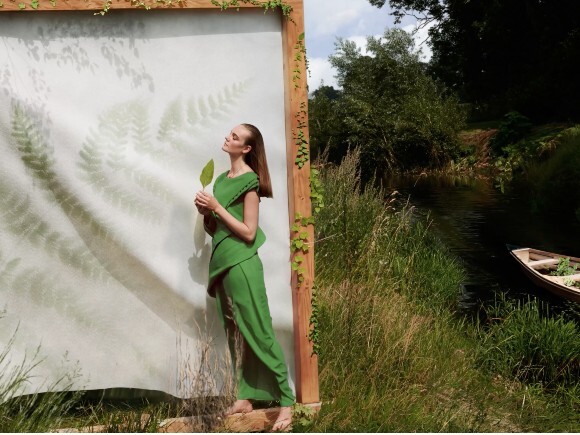
Discover the key global interior trends shaping design today, carefully translated into the world of window coverings. From Heimtextil and Milan Design Week to insights by Lidewij Edelkoort, we've curated the most relevant directions in color and material - exploring palettes, textures, and finishes. Rooted in The essence of Coulisse, these insights offer inspiration and a creative foundation for your next collection.
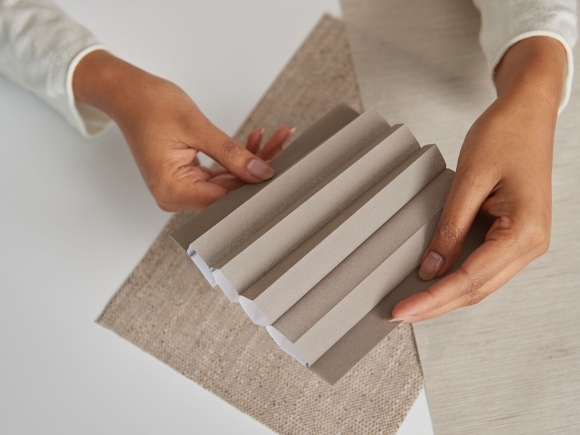
Coulisse presents Living Beauty, a timeless collection inspired by the beauty of the world. The concept centers around sustainable and textile materials and includes recycled fabrics, refined textures and luxurious velvets. With concept, we present conscious possibilities for al product groups that allow for either making a bold fashion statement or creating a stylish natural feel in the interior.
