


May we use cookies to track your activities to serve you better? We take your privacy very seriously. Please see our privacy policy for details and any questions.
Region


In the world of motorized blinds, silence is more than a feature - it’s a promise. But proving that promise requires more than just listening. It takes science. That’s why Coulisse built its own acoustic test lab, designed exclusively to measure, visualize, and improve the sound performance of Motionblinds motors and systems.
Located in our in-house engineering department in the Netherlands, the lab is a dedicated, isolated environment where prototypes, motors, and full systems are tested under strict, repeatable conditions.
“The sound lab gives us a controlled environment where we can measure motorized systems without external noise or interruptions, ensuring every test is precise.”
- Niels Schrooten, Engineer at Coulisse

We partnered with specialists in sound insulation and modular studio construction, to design a testing space that mimics real-world silence.
Housed in a professional-grade modular sound booth, the lab ensures every test is free from external interference. Inside, we rely on the advanced sound camera - a cutting-edge tool equipped with 64 microphones. It doesn’t just measure sound; it visualizes where it comes from and how it behaves.
“With the sound camera, we can actually see the difference between two systems that might sound the same to the ear. That’s how we make meaningful progress.”
- Niels Schrooten, Engineer at Coulisse

To keep results reliable and repeatable, every test follows a strict protocol. That includes fixed microphone distance, A-weighted decibel measurements, a 50 to 23,425 Hz frequency range, and a 10-second time axis.
These consistent test parameters allow us to detect subtle differences in vibration, resonance, and tone. Crucially, we test full shade systems, not isolated parts - because components like cassettes, brackets, and plugs can all amplify sound.
Our benchmarks don’t just compare different Coulisse setups, but include other brands too. It’s the only way to ensure real performance improvements, not just theoretical ones.

These lab insights directly inform the Absolute Silence engineering strategy: a holistic approach that includes new liquid-silicone silent brackets, suspension drive plugs, and motors tuned for tonal comfort.
Through sound camera analysis, we found that frequency matters as much as volume. High-frequency sounds, even at low dB levels, are often sharper and more disruptive. Lower tones, by contrast, feel softer and fade into the background.
“We now tune for perception, not just for numbers.” This approach delivers quieter performance where it counts - in nurseries, living rooms, offices, hotels and wellness spaces.
- Niels Schrooten, Engineer at Coulisse
Experience our side-by-side test—where Motionblinds proves up to 15 dB quieter.
At Coulisse, we’ve built our own soundproof lab where every test follows the exact same procedure. We keep the microphone in the same spot, measure sound over a fixed 10-second window, and track frequencies between 50 and 23,425 Hz. This way, we can make honest comparisons - both between our own products and against others on the market.
Because in places like bedrooms, nurseries, or offices, even a little motor noise can be disruptive. Our lab helps us design quieter blinds not just in theory, but in practice - so what you hear (or don’t hear) matches the product promise.
Yes. The sound camera we use captures noise as visual data - kind of like a heatmap. We can pinpoint exactly where a vibration starts or a buzz gets amplified. It’s helped us rethink how we design hardware, software, and even motor behavior.
We do. It’s the only way to know how we’re really doing. We set up competitor systems right next to our own and run both through the same tests. No guessing. No assumptions. Just real comparisons.
If you’re looking for minimal sound, we recommend Motionblinds paired with our Absolute Silence system. That includes the latest motors, silent brackets, and smart software - all designed to work together for a softer, smoother sound experience.
Pretty close. With the right combination of a well-tuned motor, smart speed control, and parts that absorb rather than amplify vibration, we’ve been able to eliminate most of the buzzing and clicking you’d normally expect.
We use a standard dBA scale, apply A-weighting for human hearing accuracy, and keep the mic setup consistent for every run. That way, we get reliable numbers - and improvements you can actually hear.
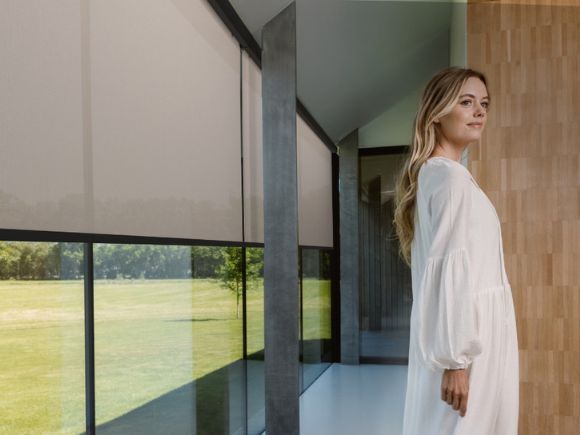
Absolute Silence is more than a motor upgrade - it’s a system rethink. Our in-house research showed that most sound doesn’t just come from the motor, but from vibrations traveling through brackets, tubes and cassettes. That’s why our engineering team re-designed every detail.
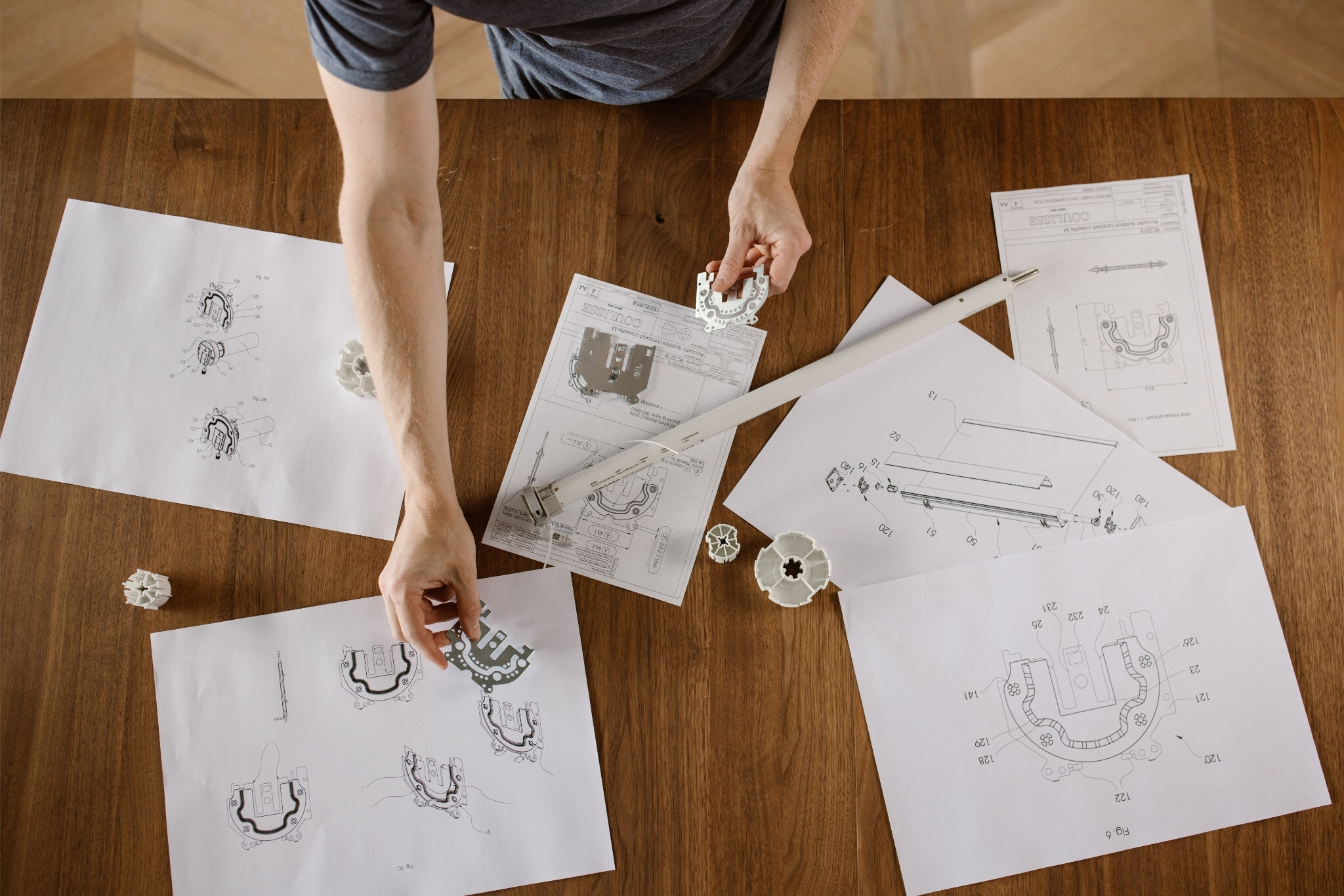
In the world of motorized window coverings, ‘quiet’ is a popular claim. But what does it really mean? At Coulisse, we believe silence goes beyond numbers. It’s about how a system performs in real life - and how it feels and sounds in the spaces people care most about: homes, nurseries, offices, hotels and wellness environments.

Motionblinds, a Coulisse brand, leads the industry with cutting-edge smart motor solutions for interior shading. Our high-quality automation enhances energy efficiency, safety, and convenience across all environments.